 |
 |
 |
|
|
|
|
|
|
Select your language


|
|
|
|
|
|
|
|
|
WHAT HAS BEEN DONE
The majority of project actions and investments are aimed to increase the survival rate of target bird species that are at present killed on their migration, roosting, breeding, or foraging habitats. The site-related actions will be carried out in the most valuable habitats.
 Birds´ collisions with power lines often happen because the birds are unable to detect the lines in their flying direction in time. Bird casualties due to collision with aboveground power lines can happen on distribution or transmission electricity grids. Frequently they can be observed especially in open areas where the power line crosses feeding, foraging, and nesting habitats used by birds. At greatest risk are the large, heavy bird species with low maneuverability, i.e. those with high wing loading and low aspect, such as bustards, pelicans, waterfowl, cranes, storks, and grouse.
The risk of collisions is higher at night, during dusk and dawn, and under weather conditions that cause poor visibility (fog, rain, strong wind,..). Such clashes at high speed have fatal consequences for birds.
A coordinated field survey of the potentially dangerous above-grounded power lines at the beginning of the project is essential in order to determine the most dangerous sections on which the flight diverters will be installed.
Achieved results:
Within the first months of the project, more than 80 field assistants in all project countries were trained on how to conduct recognition and baseline field surveys. A recognition survey was held from January to April 2021 with the main aim of recognizing the most dangerous sections of power lines within the monitored project area. More than 1380 km of different voltages and construction power lines were searched during the recognition survey in all project countries. Based on the results, the surveyed power lines were divided into 3 categories: potentially dangerous, to be verified, and not dangerous. The International GIS online database has been designed in January 2022, containing all data from field surveys (read more HERE). The monitoring scheme was updated with the results to ensure the proper implementation of the baseline survey, under which the first two categories of power lines were being monitored regularly until April 2022. Read more about the baseline survey: HERE or HERE. As a result, 34 mitigation plans - a conflict map of the riskiest power lines in priority areas were prepared, specifying the selected power lines for the installation of the bird flight diverters. The mitigation measures are being implemented by electric companies on around 263 km of top-priority power lines to increase their visibility for birds. The flight diverters have been installed in these countries:
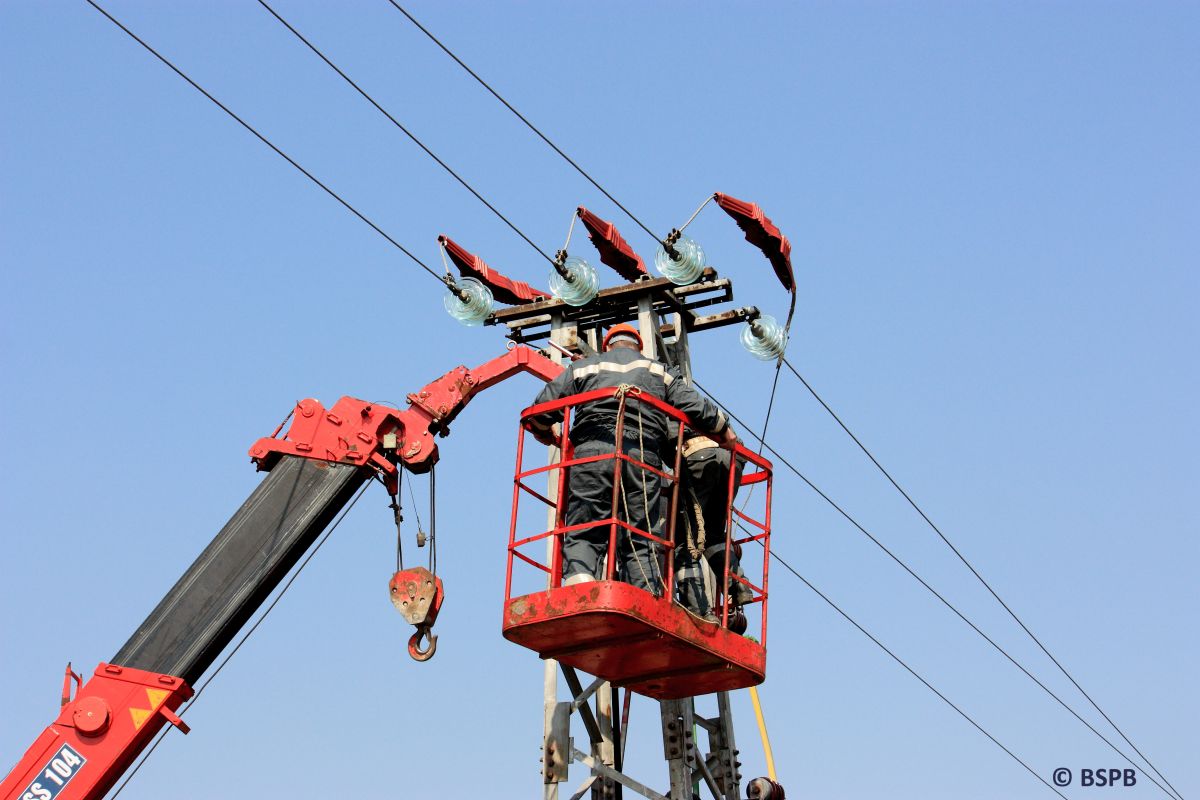
In Slovakia, the operator of the electricity transmission system - project partner Slovenská elektrizačná prenosová sústava, a. s. (SEPS) installed flight diverters on 70 km of 400 kV transmission power lines. On 30 km of lines, the latest types of RIBE flight diverters (black and white lamellas) with glow-in-the-dark illumination have been installed on the shield wires. A special crane with a basket was used for the installation; all works were carried out on switched-off lines (read more HERE). On the next sections of power lines, special drone installing FireFly diverters on the shield wire, with ability to install 2 diverters with one flight which makes the installation process even more effective (read more HERE). Another project partner, energy distribution company for Western Slovakia Západosloveská distribučná, a. s. installed flight diverters on 3 km of power lines. The installation of flight diverters in Slovaia was carried out in cooperation with the coordinating project beneficiary Raptor Protection of Slovakia.
In Hungary, 35 km of 220 kV and 400 kV transmission lines were equipped with the flight diverters thanks to our project partner MAVIR, operator of the electricity transmission system in Hungary. Four different types of diverters were used during the installations that were carried out with the help of the basket crane and drone (read more HERE).
In Croatia, more than 75 km of power lines are now more visible for birds. Distribution power lines (15 km of 35 kV lines and 40 km of 10 kV lines) have been marked with the flight diverters by the energy distribution company - project partner HEP (read more HERE). The energy transmission company HOPS equipped more than 20 km of 110 kV power lines with diverters with the help of drone technology (learn more HERE). The installation of flight diverters in Croatia was carried out in cooperation with the project beneficiary Public Institution Nature Park Kopački rit.
Energy distribution company in Serbia EPS Distribucija installed flight diverters on 30 km of the most risky sections of power lines. The installation of flight diverters in Serbia was carried out in cooperation with the project beneficiary Bird Protection and Study Society of Serbia (BPSSS) – BirdLife Serbia.
In Bulgaria, more than 15 km of distribution power lines have been marked by the energy distrubution company - project partner EDG West. The installation of flight diverters in Bulgaria was carried out in cooperation with the project beneficiary Bulgarian Society for the Protection of Birds (BSPB)/BirdLife Bulgaria.
In Romania, 35 km of power lines are now more visible for birds thanks to the flight diverters installed by the energy distribution company Rețele Electrice România S.A. The installation of flight diverters in Romania was carried out in cooperation with the project beneficiary Danube Delta Biosphere Reserve Authority (DDBRA) and Danube Delta National Institute for Research and Development.
In Austria, the Austrian Federal Railway company OEBB insulated the railway electric poles as a project action (described below). On top of that, after 12 males of Great Bustard (Otis tarda) were detected killed after the collision with a catenary system of the railway line, OEBB marked the lines with diverters immediately from its own sources concerning the extreme severity of the case to minimize the risk of the collisions in the future.
Nov 2025
Sixth Project Board Meeting 5
Read more HERE
Oct 2025
Short video series Introducing LIFE Danube Free Sky in Slovakia released 4
Watch videos HERE
Oct 2025
Oct 2025
Installations of flight diverters in Slovakia 3
Read more HERE
Sept 2025
LIFE Danube Free Sky promoted at Agrocomplex 2025 exhibition in Slovakia
June 2025
Project meeting organized in the Danube Delta
Read more HERE
May 2025
Study visit from Croatia
Read more HERE
March 2025
Short video series Introducing LIFE Danube Free Sky in Serbia released
Watch videos HERE
March 2025
Mar 2025
Fifth volunteer event organized by Nature Park Kopački rit
Read more HERE
Feb 2025
Short video series Introducing LIFE Danube Free Sky in Romania released
Watch videos HERE
Feb 2025
Dec 2024
Short Project Documentary released
Watch documentary and meet project team from all countries HERE
Dec 2024
Nov 2024
Project Board, Advisory Board and MAVIR Conference held in Egerszalók, Hungary
Read more HERE
Oct 2024
Land management in Slovakia brings first results
Watch video HERE
Oct 2024
Short video series Introducing LIFE Danube Free Sky in Bulgaria released
Watch videos HERE
Oct 2024
Sept 2024
LIFE Danube Free Sky at the IENE Conference in Praque
Read more HERE
July 2024
Short video series Introducing LIFE Danube Free Sky in Hungary released
Watch videos HERE
June 2024
Bird-watching event organized in Romania
Read more HERE
March 2024
Short video series Introducing LIFE Danube Free Sky in Croatia released
Watch videos HERE
March 2024
Feb 2024
Nest boxes for European Roller were installed in Romania
Feb 2024
Short video series Introducing LIFE Danube Free Sky in Austria released
Watch videos HERE
Oct 2023
Project Meetings and MAVIR Conference were held in Hungary
Aug 2023
New video series Birds and Power Lines Around Us released
Watch all videos here! More Info
May 2023
Installation of the satellite transmitters on Saker Falcons in Serbia
May 2023
Third birdwatching camp was organized in Croatia
April 2023
Installation of the flight diverters on railway lines in Austria
April 2023
April 2023
Nest boxes installation for the Red-footed Falcon in Bulgaria has been finished
Feb 2023
Flight diverters installation on 35kV power lines in Croatia is in progress
Feb 2023
Feb 2023
Three nest boxes for the Saker Falcon have been installed in Croatia
30 Nov 2022
Monitoring visit with NEEMO agency
30 Nov 2022
Nov 2022
Third Project Board Meeting and 13th MAVIR Bird Conservation Conference were held in Tata, Hungary
Nov 2022
50 artificial nest boxes for the European Roller were installed in Bulgaria
Nov 2022
Oct 2022
Installation of flight diverters in SPA Lehnice, Slovakia
Aug-Sept 2022
Installation of the nest boxes for the Saker Falcon in Slovakia
Aug-Sept 2022
July 2022
New project video released
June 2022
6 Imperial Eagles in Slovakia will be monitored with satellite transmitters
June 2022
April 2022
Installation of the nest boxes for the European Roller in SK
April 2022
Mitigation plans prepared
April 2022
31 Jan 2022
International GIS Online Database Designed
25 Nov 2021
12th MAVIR Bird Conservation Conference
04 Nov 2021
2nd Monitoring Visit Meeting with NEEMO
June 2021
6 Saker Falcons have been tagged with satellite transmitters
April 2021
Baseline Survey Start
27 Feb 2021
Website available in all national languages of the project countries
27 Feb 2021
12 Feb 2021
Announcing the winner of the logo competition
01 Jan 2021
Field Assistants Training Start
30 Dec 2020
International Monitoring Scheme Prepared
30 Dec 2020
16 Dec 2020
International Logo Competition Announced
01 Dec 2020
2nd Technical Online Training for Project Partners
01 Dec 2020
12 Nov 2020
Project Kick-off Press Releases
03 Nov 2020
1st Online Monitoring Meeting with NEEMO
03 Nov 2020
20 Oct 2020
1st Technical Online Training for Project Partners
07 Oct 2020
LIFE19 Welcome Meeting Organized by EASME
07 Oct 2020
29 Sep 2020
Project Kick-off Online Training
 |
 |
 |
 |
 |
 |
 |
 |
 |
 |
 |
 |
 |
 |
 |

The LIFE DANUBE FREE SKY project has received funding from the LIFE Programme of the European Union. More info.

The LIFE DANUBE FREE SKY project is part of nature conservation and biodiversity projects in Natura 2000. More info.

The LIFE Danube Free Sky project is co-financed by the Ministry of Environment of the Slovak Republic.
 |
 |
 |
Email: [email protected]
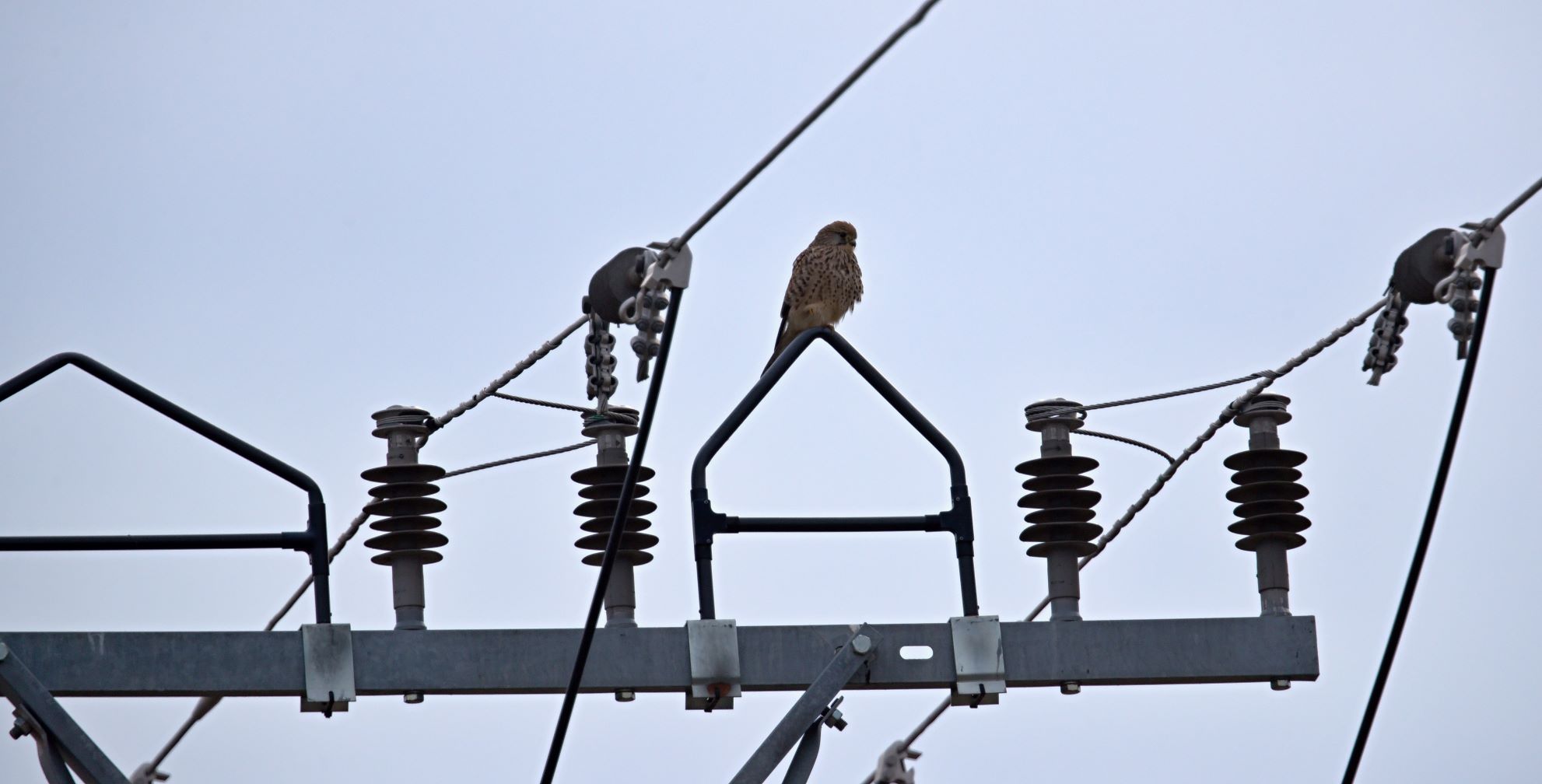 The birds are in danger of electrocution mostly while they land on the utility poles and simultaneously come into the contact with a wire or when they touch the two conductors (wires) at once. The highest risk is associated primarily with medium voltage power lines representing very attractive perches to many birds in open rural areas without tree growth. The group most threatened with electrocution is defined as the diurnal bird species, specifically eagles, hawks, vultures, kites, falcons, owls, storks and corvids. The highest mortality rate due to electrocution is registered mainly for medium-sized and large birds as they are more likely to make simultaneous contacts with unprotected elements of the pole construction.
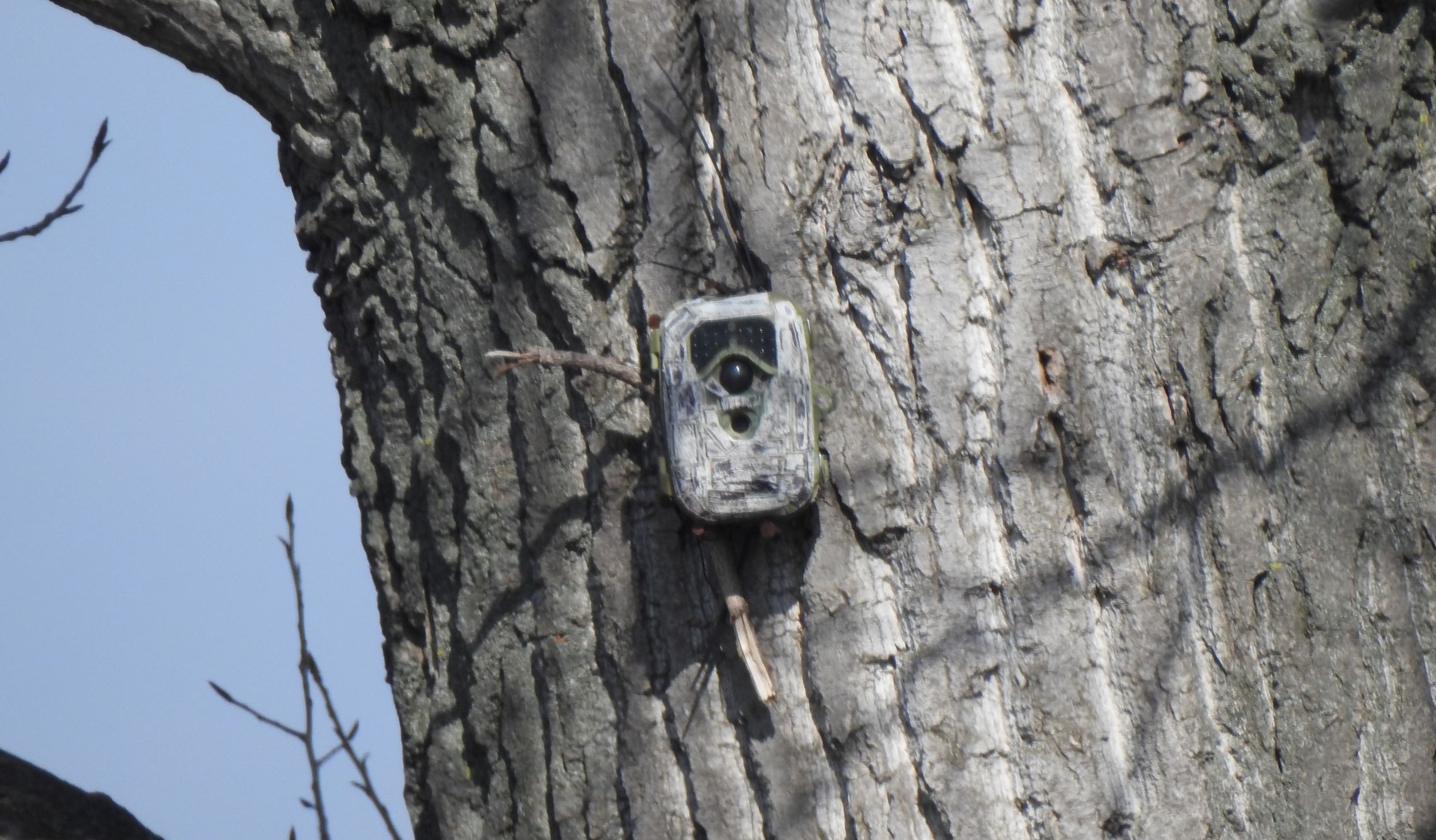 Photo traps, video cameras, and nocturnal vision systems will be used to increase the detection efficiency and identify the scavenging rate. By this, the detection efficiency will be improved as well as the magnitude of bird mortality. Technical project guidelines (international monitoring scheme) to implement project actions was prepared and adopted by all project partners during the project. Cadavers will be tested in Slovakia, Serbia, Romania, and Croatia for the presence of lead, a metal detector will be used to detect bullets. By this, we will be able to detect the influence of selected illegal activities on the behaviour of birds and mortality rates on power lines.
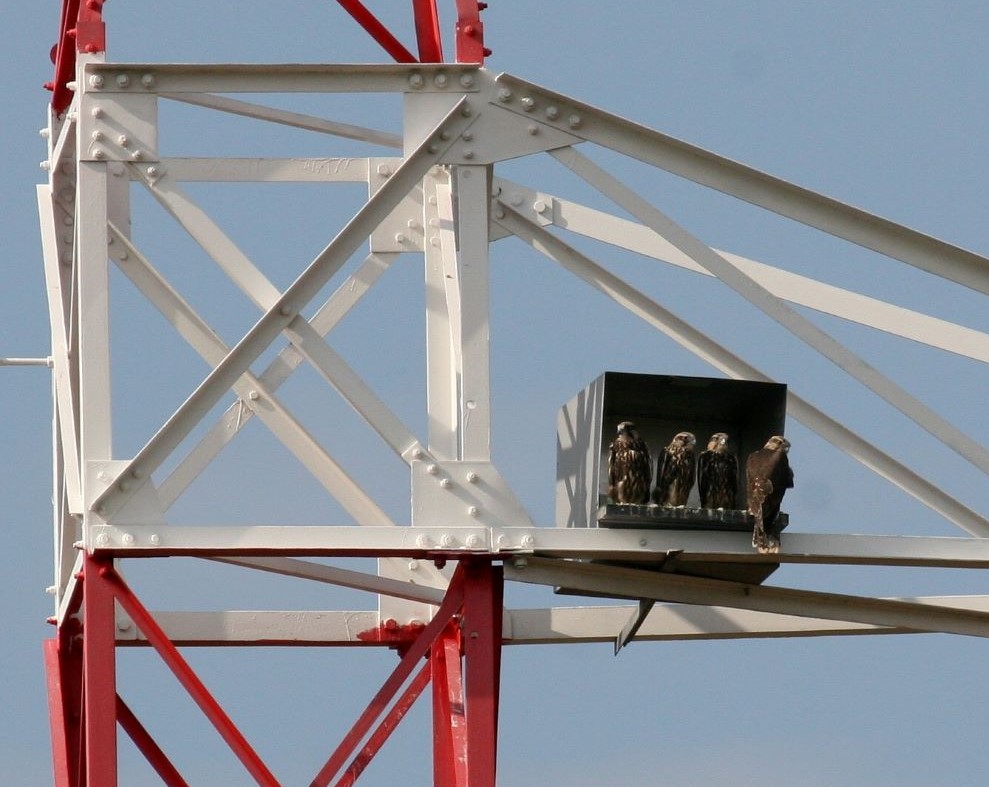 In areas within the project territory with low or no risk of collisions/electrocution, actions to create safe breeding opportunities and foraging habitats are being carried out in Serbia, Romania, Bulgaria, and Slovakia. Such measures will be focused on the most endangered among the target species, to attract birds into safe zones and thus decrease the overall mortality of individuals/increase the population. By this, the overall goal of the project will be supported.
 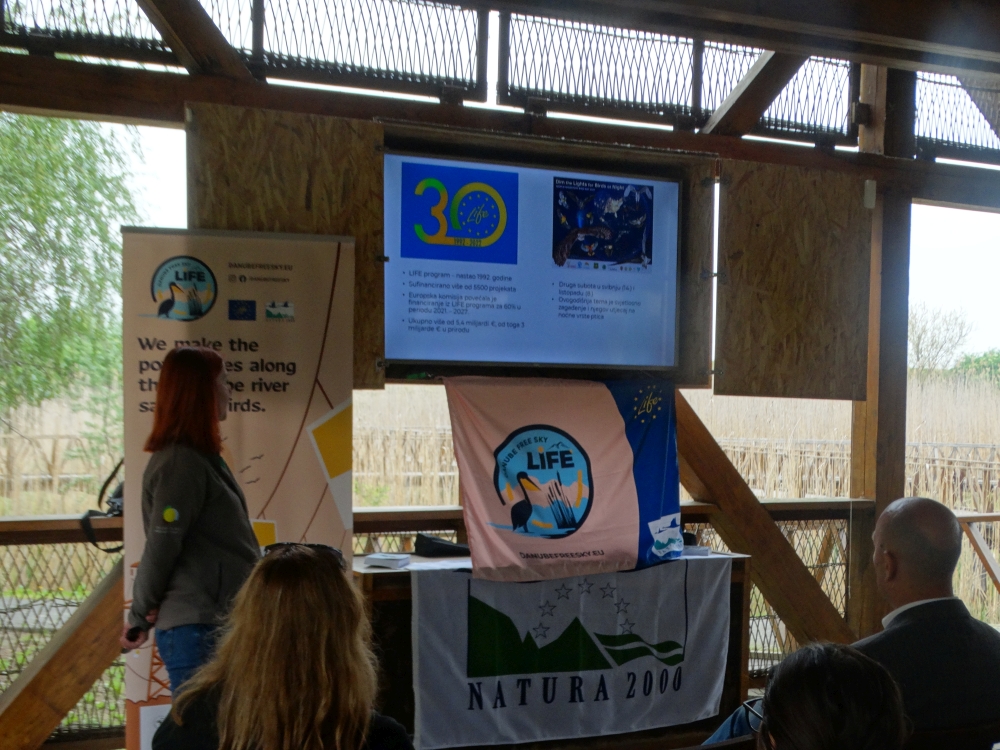 One of the aims of our project is to inform the target groups as well as the general public about project actions and activities. Public awareness activities aimed at publicizing the project as well as the importance of the Natura 2000 network are being held regularly both for the general public and stakeholders. Networking and the transfer of the methods/techniques/solutions applied in the project to other regions, countries, organizations, and experts is applied regularly.